


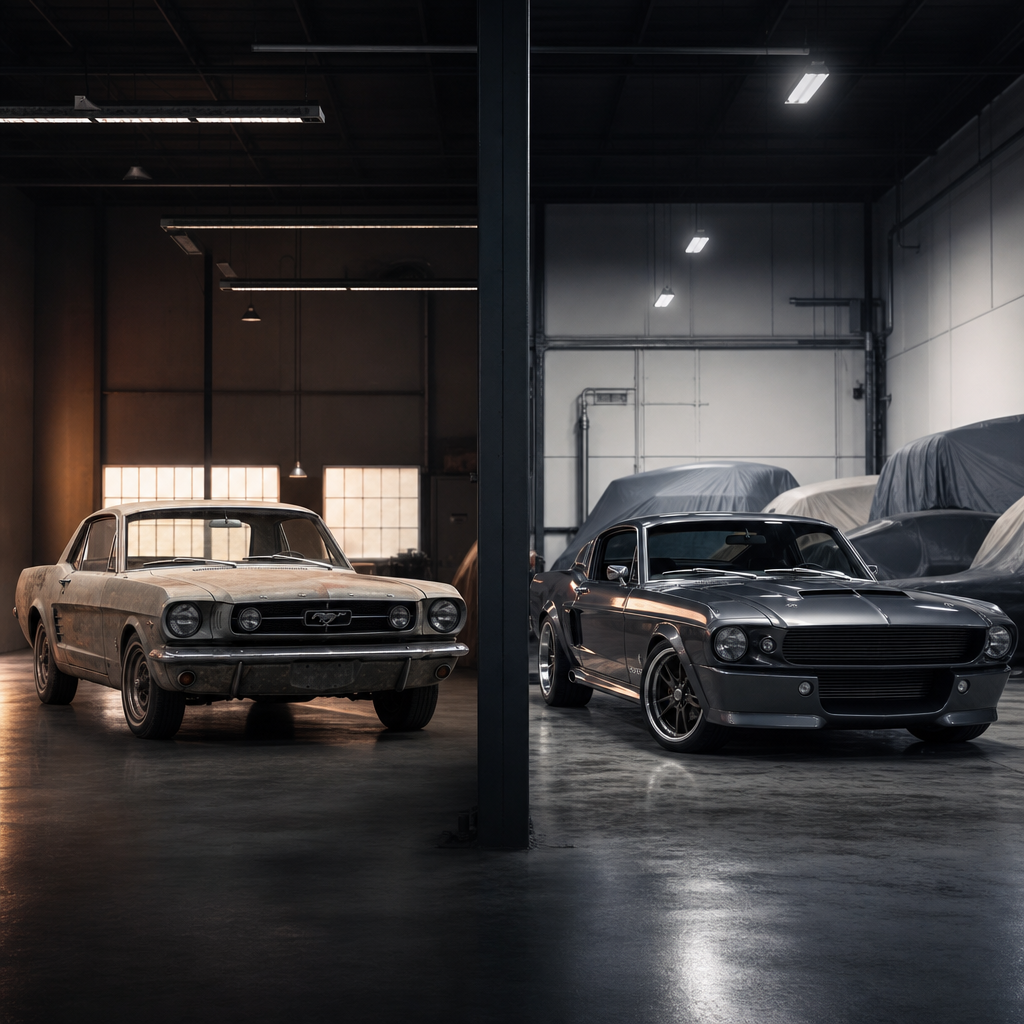
The Ford Mustang has occupied a singular place in American automotive culture for more than six decades. From its debut in 1964 to today’s turbocharged performance variants, the Mustang has never stopped evolving — and neither have the passions of the collectors who pursue it. Whether you’re drawn to a pristine 1966 fastback or a freshly reimagined classic with modern mechanicals, the decision between traditional restoration and contemporary reinterpretation is one of the most consequential choices a Mustang enthusiast can make. Understanding the nuances of each path — financially, mechanically, and emotionally — is essential before committing to either direction.
The Enduring Appeal of the Classic Mustang
There is something irreplaceable about an original Mustang in factory-correct condition. The smell of aged vinyl, the mechanical simplicity of a carbureted V8, the weight of a chrome door handle — these sensory details connect a driver to a specific moment in American history. For purists, authenticity is everything. A numbers-matching 1967 Shelby GT500 commands a premium precisely because every component traces back to the original build sheet. Deviating from that standard, even with superior modern parts, can diminish both sentimental and market value in the eyes of traditional collectors.
Traditional restoration demands patience, expertise, and access to period-correct parts — many of which are increasingly scarce. Restorers often spend years sourcing original stampings, correct-date-coded components, and factory paint codes. The investment is substantial, and the margin for error is slim. A poorly executed restoration can actually reduce a car’s value more than leaving it in original, unrestored condition. This is why seasoned collectors often advise newcomers to research extensively before touching a single bolt.
Understanding Market Value and Repair Risk
One factor that many first-time buyers overlook is how the condition of a vehicle at acquisition shapes its long-term financial trajectory. A damaged classic Mustang might appear to be a bargain, but the costs of bringing it back to show-quality condition can quickly outpace the car’s eventual market value. Understanding how repair risk shapes the price of a damaged car is a critical skill for anyone entering the classic car market. Rust in the floor pans, compromised frame rails, or a fire-damaged interior can transform what looks like an opportunity into a financial trap. Savvy buyers always factor in worst-case restoration costs before making an offer.
The Rise of the Modern Reinterpretation
Not every Mustang enthusiast wants to spend weekends nursing a temperamental carburetor or hunting for NOS parts on obscure forums. A growing segment of the collector community has embraced a different philosophy: preserve the soul of the classic Mustang while upgrading everything that makes daily driving frustrating. This approach — often called a restomod or continuation vehicle — pairs vintage aesthetics with modern engineering. The result is a car that looks like 1966 but drives like 2025.
Modern reinterpretations typically feature fuel-injected engines, independent rear suspension, power-assisted disc brakes, air conditioning systems that actually work, and interiors finished to a standard that rivals contemporary luxury vehicles. These upgrades don’t just add comfort — they fundamentally transform the driving experience. A classic Mustang body riding on a modern chassis with 400 horsepower under the hood is no longer a museum piece. It’s a driver’s car in the truest sense.
Ford’s Own Nod to Heritage: The 2026 Mustang FX Package
Even Ford itself has recognized the cultural power of its own heritage. The automaker’s decision to draw design inspiration from the Fox Body era for its 2026 Mustang FX Package signals that nostalgia is not just a collector’s indulgence — it’s a legitimate design language with broad market appeal. The behind-the-scenes story of the 2026 Ford Mustang FX Package’s Fox Body design reveals how deeply Ford’s designers studied the proportions, detailing, and character lines of the 1979–1993 generation to inform a thoroughly modern product. It’s a compelling reminder that the Mustang’s past is never truly behind it.
Revology Cars: Where Authenticity Meets Modern Engineering
For collectors who refuse to choose between period-correct style and contemporary performance, one company has built its entire identity around that exact proposition. Revology Cars produces factory-correct reproductions of 1960s Ford Mustangs — specifically the 1964½ through 1968 models — built entirely from new components. Every car features the unmistakable lines of the original, but underneath lies a modern drivetrain, updated suspension geometry, and safety systems that make these vehicles genuinely usable on today’s roads. Revology’s approach is neither a restoration nor a restomod in the traditional sense; it is a ground-up continuation vehicle built to a standard that the original factories could never have achieved.
What distinguishes Revology from other builders in this space is the obsessive attention to exterior and interior authenticity. The sheetmetal proportions, the chrome trim details, the gauge cluster design — all of it mirrors the original cars with remarkable fidelity. Yet open the hood or slide beneath the car, and you’ll find engineering that reflects decades of automotive progress. It’s a philosophy that appeals to collectors who love the look and feel of a classic Mustang but want the reliability and performance of a modern vehicle.
Making the Right Choice for Your Collection
Ultimately, the decision between traditional restoration, restomod, and continuation vehicles comes down to what you value most in a collector car. If historical accuracy and investment-grade authenticity are your priorities, a correctly restored original Mustang remains the gold standard. If you want a car that connects you emotionally to the classic era but performs reliably enough for weekend drives and road trips, a high-quality restomod or continuation vehicle may serve you better.
Budget is always a factor, but it’s rarely the only one. A well-executed restoration of a desirable Mustang variant can appreciate meaningfully over time, particularly as the supply of unrestored originals continues to shrink. Continuation vehicles from reputable builders, meanwhile, offer a different kind of value proposition — a new car experience wrapped in vintage aesthetics, with none of the anxiety that comes from owning an irreplaceable original.
Due Diligence Before You Buy
Regardless of which direction you choose, thorough due diligence is non-negotiable. Commission a professional inspection from someone who specializes in classic Mustangs. Request documentation for any restoration work already performed. Verify VIN numbers, door tags, and build sheets. And if you’re considering a damaged car as a project, be brutally honest about the scope of work required before you fall in love with the potential rather than the reality.
Conclusion
The classic Mustang market has never been more diverse or more dynamic. Collectors today have access to options that simply didn’t exist a generation ago — from concours-correct restorations to sophisticated continuation vehicles that blend the best of two eras. What remains constant is the Mustang’s ability to inspire passion, command attention, and reward those who approach it with knowledge and care. Whether you’re chasing a numbers-matching original or a beautifully engineered modern reinterpretation, the most important investment you can make is in understanding exactly what you’re buying and why.
