


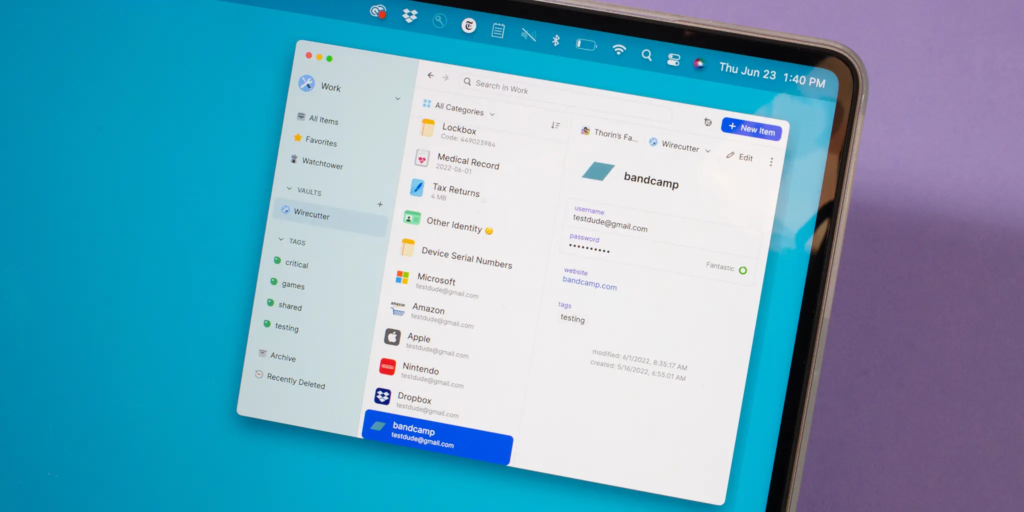
Passwords were never meant to be a memory contest. Yet many users still create a familiar word, add a number, and repeat the pattern across several services. A better system is a password manager plus a second authentication factor where available. That approach is especially useful when accessing accounts found through branded searches such as pg99 com, because it reduces the temptation to type credentials into the wrong page and makes each account independent from breaches elsewhere.
A reliable digital routine is built around one idea: better authentication tools remove the need to invent and remember weak variations of the same password. That sounds modest, but it has a large effect on account safety and usability. Clear steps are especially valuable when a user is under pressure, because pressure is when people are most likely to repeat an action, overlook a warning, or share information they would normally protect.
Watch for unexpected verification prompts
From a security perspective, this is one of the highest-value habits for the effort involved. A sudden request for a code can indicate a new device, a security review, or an attempted login by someone else. The strongest approach is deliberately uneventful: verify the information, make one decision at a time, and preserve the record. The goal is not to distrust every page. It is to notice the few details that can materially change what happens next and give them the attention they deserve.
Another reason to focus on “watch for unexpected verification prompts” is that it improves the quality of the record left behind. A clear sequence of dates, statuses, settings, or transaction details is easier to verify than memory. That record helps the user make a calmer decision now and gives support something specific to investigate later. Good digital habits are often less about technical skill than about keeping uncertainty from spreading.
Keep the browser updated
The reason this matters is not theoretical. Security fixes and compatibility updates reduce avoidable problems on modern login pages. The useful habit is to make this detail visible before taking the next action. Read what the screen or policy actually says, compare it with your situation, and avoid filling missing information with assumptions. A short pause here usually saves more time than correcting a rushed decision later.
This point also fits the wider principle that better authentication tools remove the need to invent and remember weak variations of the same password. The connection is practical: each careful check removes one source of ambiguity before the next step. That means fewer duplicate actions, fewer unnecessary resets, and fewer situations where the user has to reconstruct events from memory. The process may add a minute at the beginning, but it usually removes much more friction at the end.
What a password manager improves
- unique credentials for every site
- fewer reused passwords
- less typing on lookalike pages
- strong random passwords
- simpler credential updates after a breach
- less dependence on memory
Disable suspicious extensions
This detail becomes important the moment something unexpected happens. Extensions that can read page content may interfere with forms or create unnecessary exposure. What matters is not memorizing a rule but building a repeatable checkpoint. Confirm the relevant detail, keep a record when the action affects access or money, and move forward only when the next step is supported by what you can see rather than by what you hope has happened.
Use “Disable suspicious extensions” as a checkpoint inside an access attempt, not as an isolated tip. If the information is clear, the next step becomes easier to justify. If it is not clear, write down the status before changing anything else. That simple record preserves the sequence and gives you something concrete to compare after the next action. It also makes any later support conversation shorter because the facts are already separated from assumptions.
Use trusted networks for sensitive access
There is also a record-keeping benefit that is easy to miss. A familiar connection reduces uncertainty when an account is already behaving unexpectedly. This is easiest to manage when the user separates observation from action. First identify the current status; then decide whether the safest next step is to continue, wait, test a low-risk change, or ask a focused question. That sequence prevents one uncertain moment from creating several new problems.
There is a useful test for this point: imagine you had to explain “use trusted networks for sensitive access” to someone who cannot see your screen. You should be able to state what you expected, what actually happened, and which detail proves the difference. If you cannot do that yet, collect the missing information first. The exercise turns a vague concern into a checkable situation and reduces the temptation to solve uncertainty by clicking faster.
Do not approve a login you did not initiate
This sounds simple, but it changes how the whole process feels. Push notifications and one-time codes should be treated as security events, not routine pop-ups. In a well-managed account, this becomes a small routine rather than an emergency response. The user checks the detail, understands why it matters, and keeps enough information to explain the decision later. That is especially valuable when verification, security, or real money is involved.
The practical benefit shows up under pressure. During an access attempt, users are more likely to repeat an action, overlook a condition, or change several variables at once. Treating “do not approve a login you did not initiate” as a fixed part of the process creates a pause at exactly the right moment. Over time that pause becomes automatic, which is more valuable than trying to remember a long list of rules after something has already gone wrong.
Why Password Managers Change the Daily Experience
The biggest advantage of a password manager is not stronger passwords in the abstract. It is that security becomes easier to maintain. Each account can use a random unique credential without requiring the user to remember it, and the manager can reduce typing on lookalike pages by recognizing the expected domain. When one service suffers a breach, the other accounts do not share the exposed password.
The remaining responsibility is to protect the password manager itself with a strong master password and device security. Add a second factor where possible and keep recovery information current. This creates a much better trade-off than memorizing small variations of the same password. Strong authentication should remove cognitive work from the user, not add a new daily puzzle.
The Decision Point Most People Skip

Users should also distinguish convenience from trust. A browser that remembers an account on a personal, locked device may be reasonable; the same behavior on a work, school, or family computer is not. Security settings make sense only in context. The device owner, physical access, browser profile, and recovery channel all matter as much as the password itself.
Security tools work best when they become routine. Unique credentials, current recovery information, a trusted access route, and stronger authentication where available reduce the need for improvisation. That fits the wider principle that better authentication tools remove the need to invent and remember weak variations of the same password: the secure option should become the normal option, not an emergency measure used only after suspicious activity appears.
The password manager itself should not become a single unprotected point of failure. Use a strong master password, enable a second factor, and make sure recovery options are documented somewhere private. Convenience works best when the recovery plan is equally deliberate.
Conclusion
Password managers and stronger authentication remove much of the daily burden from account security. The goal is to make the secure action the easiest normal action.
After confirming that the page is the one you intend to use, Đăng nhập pg99 can be bookmarked for future access so you are less dependent on advertisements, old links, or lookalike search results.
